Bath Bomb Secrets the Professionals Don't Want You to Know
DiY Relaxing Rose Bath Bombs that are exquisitely giftable.
Bath bombs are a fizzy parcel of hydrotherapy in a joyful single serving portion. The dry bath bomb enters the bath tub and immediately erupts in fizzy, foaming delight that is reminiscent of the volcano demonstrations at grade one science fairs. However, the bath bomb is even more wonderful because it explodes with fragrance and herbal goodness, moving a mundane bath into the realm of therapeutic delight. But even though they are wonderful, soothing, and fragrant, the technique necessary to make them at home is difficult to master.
joyful single serving portion. The dry bath bomb enters the bath tub and immediately erupts in fizzy, foaming delight that is reminiscent of the volcano demonstrations at grade one science fairs. However, the bath bomb is even more wonderful because it explodes with fragrance and herbal goodness, moving a mundane bath into the realm of therapeutic delight. But even though they are wonderful, soothing, and fragrant, the technique necessary to make them at home is difficult to master." width="800" height="1203" />
I thought bath bombs would be my defeat. For a few years now I’ve tried to make bath bombs for gifts. I’ve had eternally fizzing messes rather than giftable bombs. I’ve tried changing the recipe, using witch hazel instead of water, Dead Sea Salt instead of Epsom salts, and even omitting the essential oils. But nothing really stopped my bombs from fizzling out prematurely. Now the good news is that bombed bath fizzies, once dry, can be broken up and put in a jar for bubble bath. But they just aren’t as fun to give as gifts.
Bath salts aren’t too expensive in the store. But fizzy bath bombs are Lush-worthy at $7 apiece, in Canada. That’s an impressive gift, don’t you think?
This recipe was a collaborative effort. As I was close to giving up in defeat, I asked for a little help from my tribe. Amanda from The Orange Blossom Soap Company in Amarillo, Texas, analyzed my recipe for me and gave me her expert advice so that my next bath fizzy wouldn’t bomb. (pun intended) Thank you, Amanda. The ladies on my gift list thank you. If you have a chance pop over to Amanda’s Facebook page and tell her thanks, too. And while you are there have a look at the amazing bath bombs that Amanda makes. There’s even a dragon’s blood bath bomb.
joyful single serving portion. The dry bath bomb enters the bath tub and immediately erupts in fizzy, foaming delight that is reminiscent of the volcano demonstrations at grade one science fairs. However, the bath bomb is even more wonderful because it explodes with fragrance and herbal goodness, moving a mundane bath into the realm of therapeutic delight. But even though they are wonderful, soothing, and fragrant, the technique necessary to make them at home is difficult to master." width="800" height="532" />
Here’s how to make your bath bombs successful
Choose a day to make bath bombs when the humidity is under 40%. If you have a high humidity day, with a chance of showers, the salt in the bath bombs may absorb moisture out of the air and fizz up prematurely. It’s not a good day to make bath bombs if it’s raining.
This bath bomb gets its pink shade from rosehip extract, which is a water soluble colouring, rich in vitamin C as well as 32 other vitamins and minerals. Rosehip extract is astringent, anti-inflammatory and helps with joint and muscle pain. It improves the elasticity of the skin, as well. Doesn’t that sound perfect for YOUR luxurious bathtime.
joyful single serving portion. The dry bath bomb enters the bath tub and immediately erupts in fizzy, foaming delight that is reminiscent of the volcano demonstrations at grade one science fairs. However, the bath bomb is even more wonderful because it explodes with fragrance and herbal goodness, moving a mundane bath into the realm of therapeutic delight. But even though they are wonderful, soothing, and fragrant, the technique necessary to make them at home is difficult to master." width="600" height="599" />
The colour is pale until you start spritzing it with alcohol. But when it hits the bath tub, you’ll see a nice pink fizz, while it adds all of its rosy nourishment to the bath.
The essential oils in this recipe were picked for their relaxing, anti-inflammatory qualities. Cedarwood Atlas essential oil is known to reduce cellulite, and increase feelings of relaxation and well-being, while rose geranium and lavender are both anti-inflammatory and analgesic, with mood-lifting qualities. The predominant scent is rose.
joyful single serving portion. The dry bath bomb enters the bath tub and immediately erupts in fizzy, foaming delight that is reminiscent of the volcano demonstrations at grade one science fairs. However, the bath bomb is even more wonderful because it explodes with fragrance and herbal goodness, moving a mundane bath into the realm of therapeutic delight. But even though they are wonderful, soothing, and fragrant, the technique necessary to make them at home is difficult to master." width="800" height="532" />
Rose Bath Bombs
Rose bath bombs get their pretty pink coloring from dried rose hips, and their scent from rose geranium essential oil, which is therapeutic, uplifting, and anti-inflammatory. Make a batch in 30 minutes using the tips in this post.
- Prep Time: 30 minutes
- Total Time: 30 minutes
- Yield: 6 large bath bombs
- Category: Bath Bombs
Ingredients
- 1 cup of baking soda
- ¼ cup Celtic sea salt, fine grade
- ¼ cup kaolin clay
- 1 tbsp. rose hip extract/colorant (optional)
- 1 tbsp. rosehip seed oil
- 2 tsp. sunflower lecithin
- 10 drops cedar wood atlas essential oil
- 12 drops lavender essential oil
- 10 drops rose geranium essential oil
- ½ cup citric acid
- 4 to 8 spritzes of 95% Isopropyl alcohol
Equipment needed:
- Wire Whisk
- Glass mixing bowl
- Spray bottle for isopropyl alcohol
- Bath bomb molds like this or this
Instructions
- Place baking soda, sea salt, clay, rose hip extract/colorant, rose hip seed oil, and lecithin into the mixing bowl. Whisk the mixture to blend in the color and remove any clumps of baking soda. Whisk until it is of uniform fine consistency and a pale pink in colour.
- Using the whisk, stir in the essential oils. Mix well so that the mixture has a uniform consistency.
- Whisk the citric acid into the mixture. There is no water in this mixture so there should be no foaming up. Mix fully with the whisk.
- There is no need to treat the molds. The mixture will drop out of the molds without issue.
- Working in a well-ventilated area, spritz the mixture lightly with the alcohol, while whisking to prevent a fizzing reaction. Avoid breathing in the alcohol. Add only enough alcohol to allow the mixture to clump together when squeezed in your hand. It should have the moisture content of barely damp sand. Try three spritzes and then check the consistency. Test it to see if it will hold together. It should be fluffy after spritzing, not dense and wet.
- Only add more alcohol if the mixture won’t hold together easily. How much alcohol you need depends on the relative humidity in your air.
- Using the bath bomb mold, scoop up enough of the mixture into each half of the bath bomb, so that both sides are over-full. Really pack it in. Press the two halves of the mold together tightly, to compress the bath bomb mixture into a tight package. Brush off any excess mixture.
- Allow the mold to sit undisturbed for 10 to 15 minutes. Tap the outside of the mold on both sides with the back of a spoon to loosen the bath bomb. Open the mold and pop out the bath bomb onto a piece of parchment paper-lined baking sheet. Be gentle. The bath bomb will solidify as it dries.
- Allow the bath bombs to dry overnight. Turn it over and dry for an additional 12 hours. Wrap the bath bombs in plastic wrap or a shrink wrap, if desired, to make them more secure if you are gifting them.
To Use:
- Drop one bath bomb into a bath of hot water, just before you are ready to enter the bath. The lecithin allows the oil in the bath bomb to mix with the water, so that your tub doesn’t become slick with the oil.
Notes
The lecithin in this recipe helps the oils mix with the bath salts and minimizes risk from falling since the oils stay suspended in the water rather than coating the bottom of the bathtub. If you are allergic to sunflower lecithin, soy lecithin can be used instead.
Yield: 6 large bath bombs
Ingredients:
1 cup of baking soda
¼ cup Celtic sea salt, fine grade
¼ cup kaolin clay
1 tbsp. rose hip extract/colorant (optional)
1 tbsp. rosehip seed oil
2 tsp. sunflower lecithin
10 drops cedar wood atlas essential oil
12 drops lavender essential oil
10 drops rose geranium essential oil
½ cup citric acid
4 to 8 spritzes of 95% Isopropyl alcohol
Equipment needed:
Wire Whisk
Glass mixing bowl
Spray bottle for isopropyl alcohol
Bath bomb molds like this or this
joyful single serving portion. The dry bath bomb enters the bath tub and immediately erupts in fizzy, foaming delight that is reminiscent of the volcano demonstrations at grade one science fairs. However, the bath bomb is even more wonderful because it explodes with fragrance and herbal goodness, moving a mundane bath into the realm of therapeutic delight. But even though they are wonderful, soothing, and fragrant, the technique necessary to make them at home is difficult to master." width="800" height="532" />

Directions:
Place baking soda, sea salt, clay, rose hip extract/colorant, rose hip seed oil, and lecithin into the mixing bowl. Whisk the mixture to blend in the color and remove any clumps of baking soda. Whisk until it is of uniform fine consistency and a pale pink in colour.
Using the whisk, stir in the essential oils. Mix well so that the mixture has a uniform consistency.
Whisk the citric acid into the mixture. There is no water in this mixture so there should be no foaming up. Mix fully with the whisk.
There is no need to treat the molds. The mixture will drop out of the molds without issue.
Working in a well-ventilated area, spritz the mixture lightly with the alcohol, while whisking to prevent a fizzing reaction. Avoid breathing in the alcohol. Add only enough alcohol to allow the mixture to clump together when squeezed in your hand. It should have the moisture content of barely damp sand. Try three spritzes and then check the consistency. Test it to see if it will hold together. It should be fluffy after spritzing, not dense and wet.
Only add more alcohol if the mixture won’t hold together easily. How much alcohol you need depends on the relative humidity in your air.
Using the bath bomb mold, scoop up enough of the mixture into each half of the bath bomb, so that both sides are over-full. Really pack it in. Press the two halves of the mold together tightly, to compress the bath bomb mixture into a tight package. Brush off any excess mixture.
Allow the mold to sit undisturbed for 10 to 15 minutes. Tap the outside of the mold on both sides with the back of a spoon to loosen the bath bomb. Open the mold and pop out the bath bomb onto a piece of parchment paper-lined baking sheet. Be gentle. The bath bomb will solidify as it dries.
Allow the bath bombs to dry overnight. Turn it over and dry for an additional 12 hours. Wrap the bath bombs in plastic wrap or a shrink wrap, if desired, to make them more secure if you are gifting them.
To Use:
Drop one bath bomb into a bath of hot water, just before you are ready to enter the bath. The lecithin allows the oil in the bath bomb to mix with the water, so that your tub doesn’t become slick with the oil.
joyful single serving portion. The dry bath bomb enters the bath tub and immediately erupts in fizzy, foaming delight that is reminiscent of the volcano demonstrations at grade one science fairs. However, the bath bomb is even more wonderful because it explodes with fragrance and herbal goodness, moving a mundane bath into the realm of therapeutic delight. But even though they are wonderful, soothing, and fragrant, the technique necessary to make them at home is difficult to master." width="800" height="1203" />
6 Bath bomb secrets so you can invent your own bath bombs
- Don’t use Epsom salts or Dead Sea salts. Save these for bath salts. The magnesium draws moisture from the air and encourages premature fizzing.
- Go easy on the percentage of oils in the recipe. Too high a percentage of oils can cause the bath bombs to remain soft, instead of hardening.
- Use 90% or higher isopropyl alcohol as the liquid. Water, witch hazel, and other common liquids used for bath bombs are fine in a desert climate, but if you live where there is any humidity they will cause premature fizzing. Isopropyl alcohol evaporates quickly so you can avoid the worst of the fizz.
- Begin the recipe with 2 parts baking soda to 1 part citric acid and 1/2 part modulator like rice flour, salt, or clay. The modulator inhibits the reaction between the acid and the baking soda, giving you more time to mix in the liquid.
- Avoid liquid food colourings until you are comfortable with the method. Water soluble color can be added to the alcohol in the spritz bottle.
- One cautionary tale. Do avert your face from the isopropyl alcohol fumes, as you are working. I didn’t the first time and had a painful day or two till my lungs worked out the inflammation.
joyful single serving portion. The dry bath bomb enters the bath tub and immediately erupts in fizzy, foaming delight that is reminiscent of the volcano demonstrations at grade one science fairs. However, the bath bomb is even more wonderful because it explodes with fragrance and herbal goodness, moving a mundane bath into the realm of therapeutic delight. But even though they are wonderful, soothing, and fragrant, the technique necessary to make them at home is difficult to master." width="800" height="1203" />
I wrapped my bath bombs in plastic wrap, but if you have some pretty gauze draw string bags, they would be perfect for displaying the bath bombs. And they could be reused over and over again. I gifted these in a recycled 1 ½ quart glass mayonnaise jar with a wide mouth lid. I tucked a dollar store bath scrubby in the top and put a daisy lid to allow the ribbon from the bath scrubby to pull through. This lets the sweet rose fragrance out of the top of the jar.
The 1 ½ quart jar held 6 bath bombs, but a one quart wide mouth jar held only 3.
Enjoy!
More herbal bath goodness
Make herbal bath salts with Dead Sea salts
Create Herbal Healing Baths from Your Garden
joyful single serving portion. The dry bath bomb enters the bath tub and immediately erupts in fizzy, foaming delight that is reminiscent of the volcano demonstrations at grade one science fairs. However, the bath bomb is even more wonderful because it explodes with fragrance and herbal goodness, moving a mundane bath into the realm of therapeutic delight. But even though they are wonderful, soothing, and fragrant, the technique necessary to make them at home is difficult to master." width="800" height="532" />
More Bath Bomb Inspiration:
My friend, Jan Berry of The Nerdy Farm Wife has been crafting herbal bath bombs, herbal bath salts, and exquisite natural and herbal soap. She captured her process and creative recipes in a neat package so that you can recreate her natural and therapeutic bath products in your own kitchen.
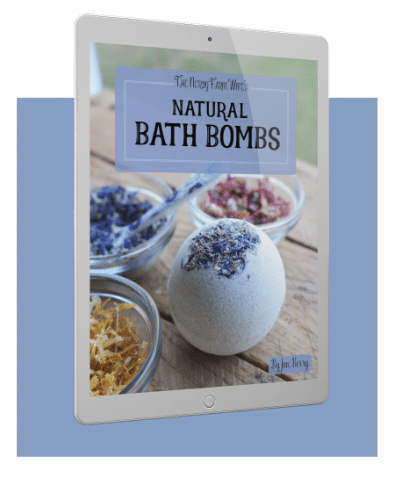
Have a look at Jan’s book here.
Save
Save
Save
Save
Save

Save


Comments
Post a Comment